Home How a Drone Works

A Beginner's Guide to Drone Warfare

History

1849-2011

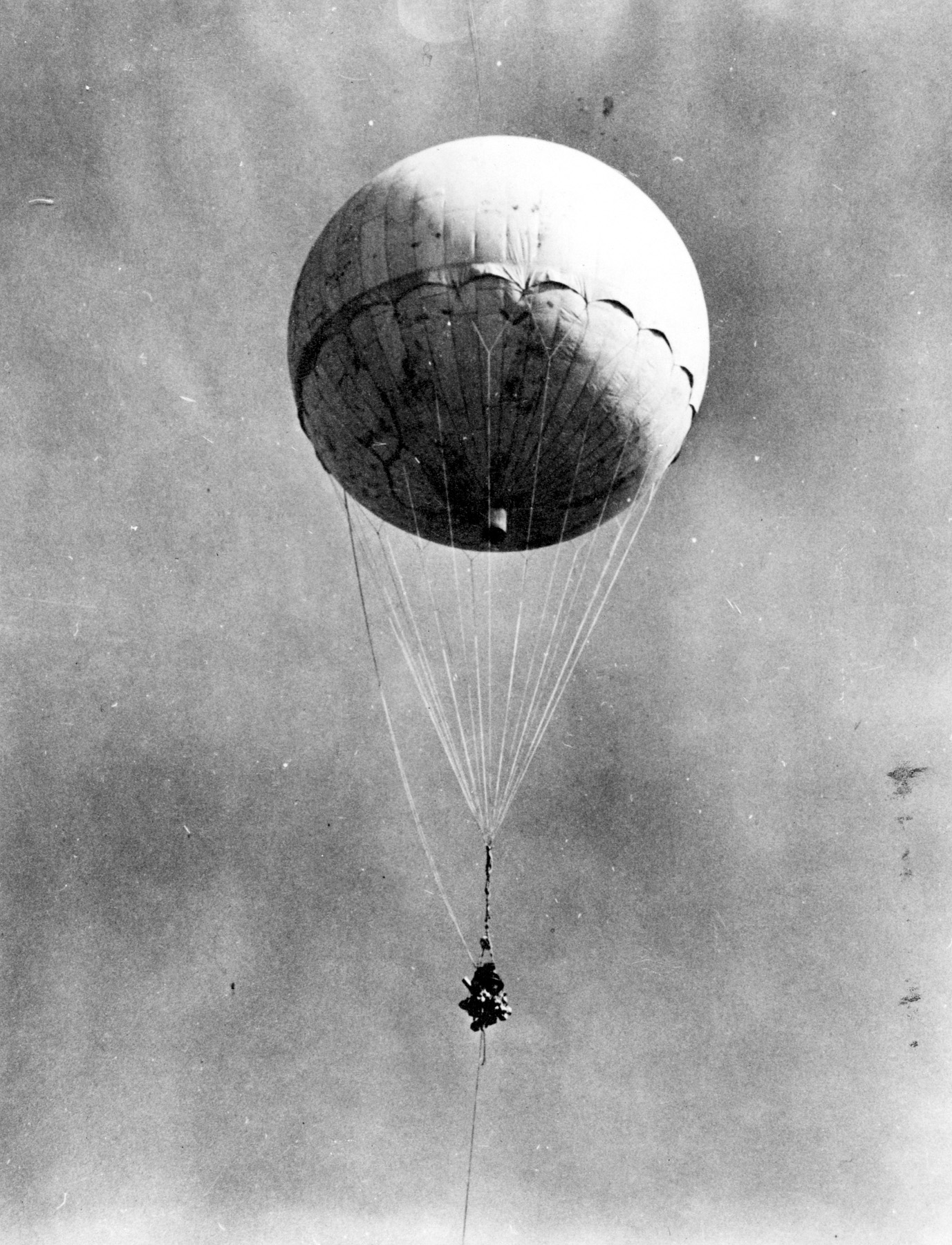
The first documented usage of drones in warfare would technically be in 1849, when the Austrian military launched unmanned balloons into the sky carrying bombs against Venice. Although people today would laugh at the thought, it is technically the older brother to all drones and therefore commands a certain type of respect. Next, we transport ourselves to 1907, when, four years after the Wright Brothers were the first to fly, France welcomed the brothers and their trailblazing ideas with open arms. Newspapers, common folk, and even kings were enchanted by the idea of flight, fueling a hyperfocus in the inventing industry. Louis Breguet and Charles Richet started experiments on a quadcopter in hopes of making some groundbreaking discovery that would distinguish them and cement them in this time of history. They built the "Gyroplane No. 1" and successfully flew in France on September 19, 1907. Unfortunately for these two blokes, the stability was nothing short of a nightmare because trying to keep four motors synchronized was difficult before modern electronics. It only briefly rose off the ground and could not fly freely or steer reliably, thus putting somewhat of a pause on quadcopters in the history of drones. Quadcopters began commercial production at Draganfly Innovations of Canada in 1999. Priced at US$2,000-$10,000, the drone could go around 20 mph and was for hobbyists and photography.
2012-2013

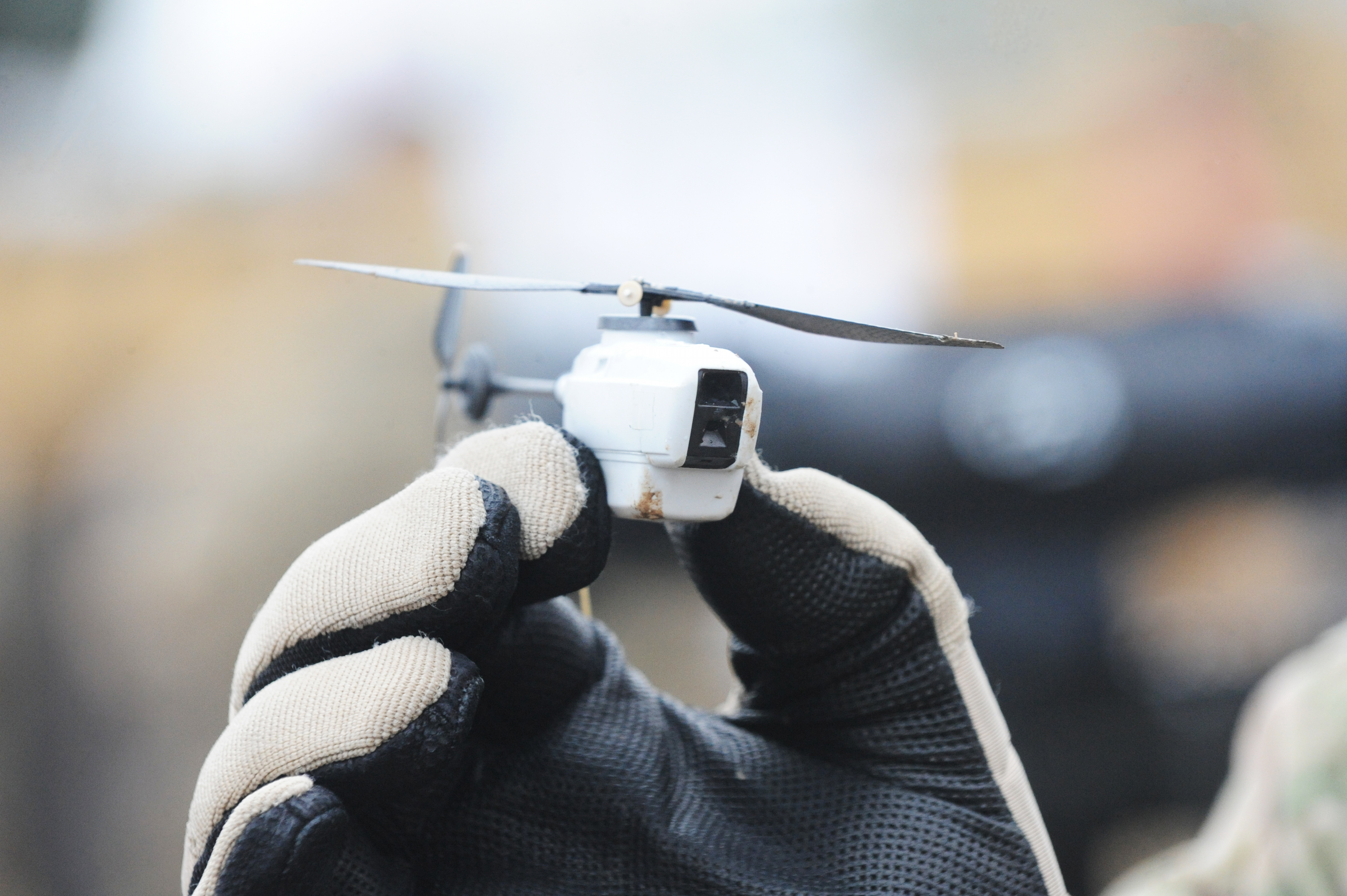
Drones "take off" in 2012. Context: on September 11, 2001, terrorists led by Osama bin Laden orchestrated four hijackings in the United States. Osama bin Laden was based in Afghanistan. The Taliban government protected bin Laden and would not hand him over to the US. The US and its allies invaded Afghanistan in order to dismantle al-Qaeda and remove the Taliban. Thus ensued a long and controversial episode in the Middle East in the name of counterterrorism. That takes us back to electric drones, which were first used in 2012 by Great Britain in the Afghanistan war. The "Black Hornet" was used here, marking the start of a revolution that would change the future of warfare forever.
The "Black Hornet" was approximately 16 cm long and weighed 16 grams. It was a tiny electric helicopter. This copter featured a daylight camera as well as thermal imaging cameras. Depending on the weather as well as the drone itself, the range was about 2 kilometers. The flight time would last about 25 minutes for each drone. The pilot would control it from a ground station with a handheld remote out in the field. Navigation was GPS-based and allowed for manual and programmed flights. The drone was good for surveillance and screening areas to ensure there were no explosives.

2014-2015

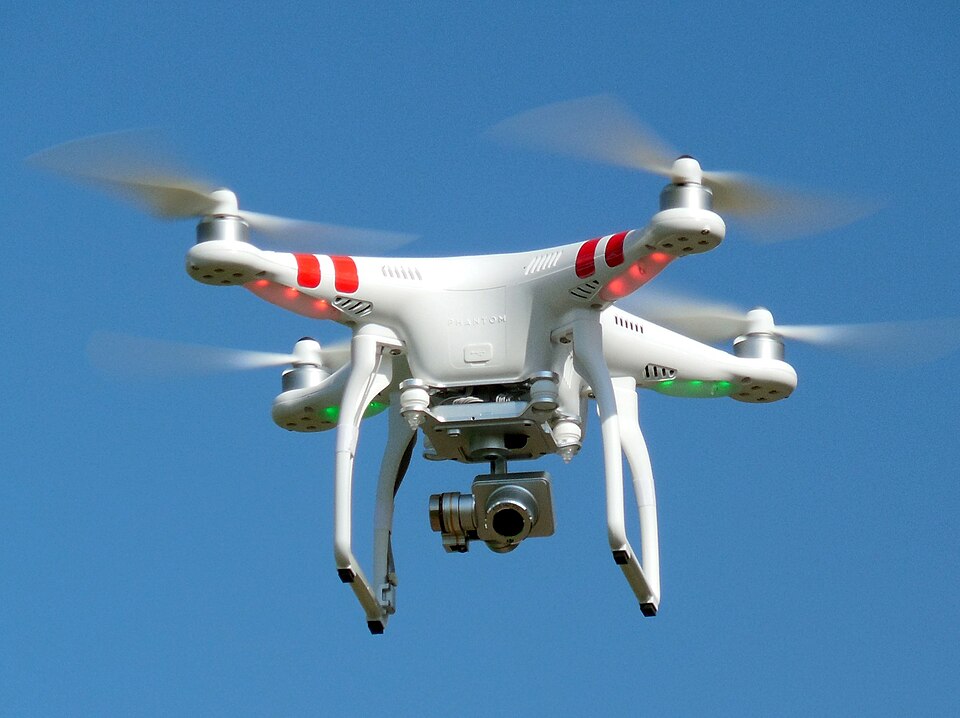
Dawn of the quadcopter in warfare. When you think of the word drone, likely the first thing that comes to mind would be a quadcopter. We last left off with quadcopters in 1999. Fast-forward 15 years, and quadcopters have evolved 100 times beyond what they had in the past 92 years. You could now go to Amazon, get a $30-$150 drone, and do whatever you would please with it. (The $30 drones couldn't do much.) ISIS took note and was one of the first to repurpose these ordinary quadcopters. They bought DJI copters through civilian markets and proceeded to use them for surveillance, such as the Brits had used a few years earlier in nearby Afghanistan. Eventually, they were able to successfully build simple mechanisms that could release tiny explosives. Thus, we see the first implementation of many explosive quadcopters. ISIS also used their footage to try and intimidate other nations or their own citizens into believing that they were more dangerous than they were. They did not have much respect for their drones and treated them as disposable. The engineering had not been the breakthrough this controversial group was able to use; rather, it was the innovations in making cheaper quadcopters and lots of them.

2016-2020

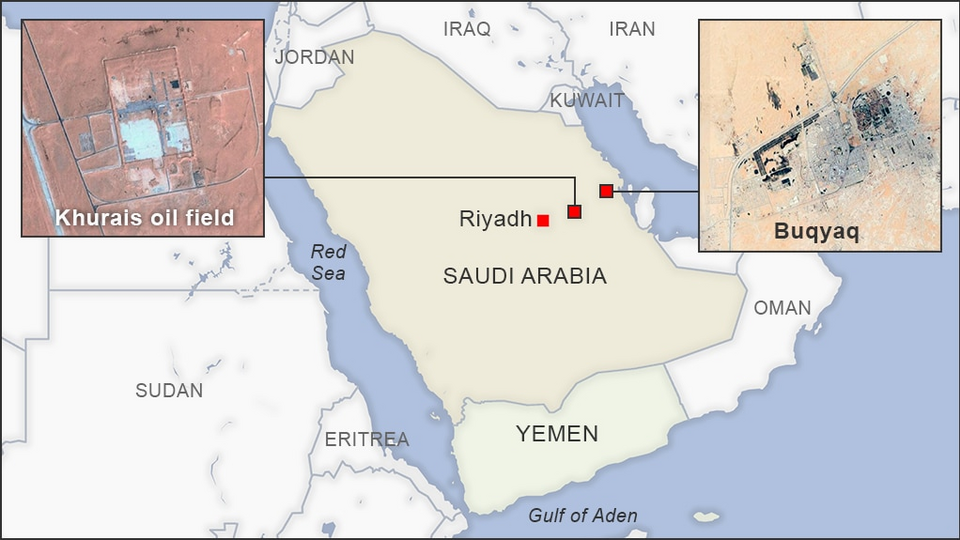
ISIS continued to expand drone usage in Iraq and Syria. There were not many major events through 2018, with simple drones being used for surveillance and small attacks as they had been. 2019, however, brought a first major attack on Saudi oil facilities that showed a combination of 18 drones and 7 cruise missiles could target major or important infrastructure. Although many remember 2020 for the COVID-19 virus, those who were in the Nagorno-Karabakh war remember the advanced implementation of drones. These quadcopters were now used for surveillance, targeting, and armed strikes. This was at a wider scale than ever before and was a major war to involve masses of drones.

2021-Today

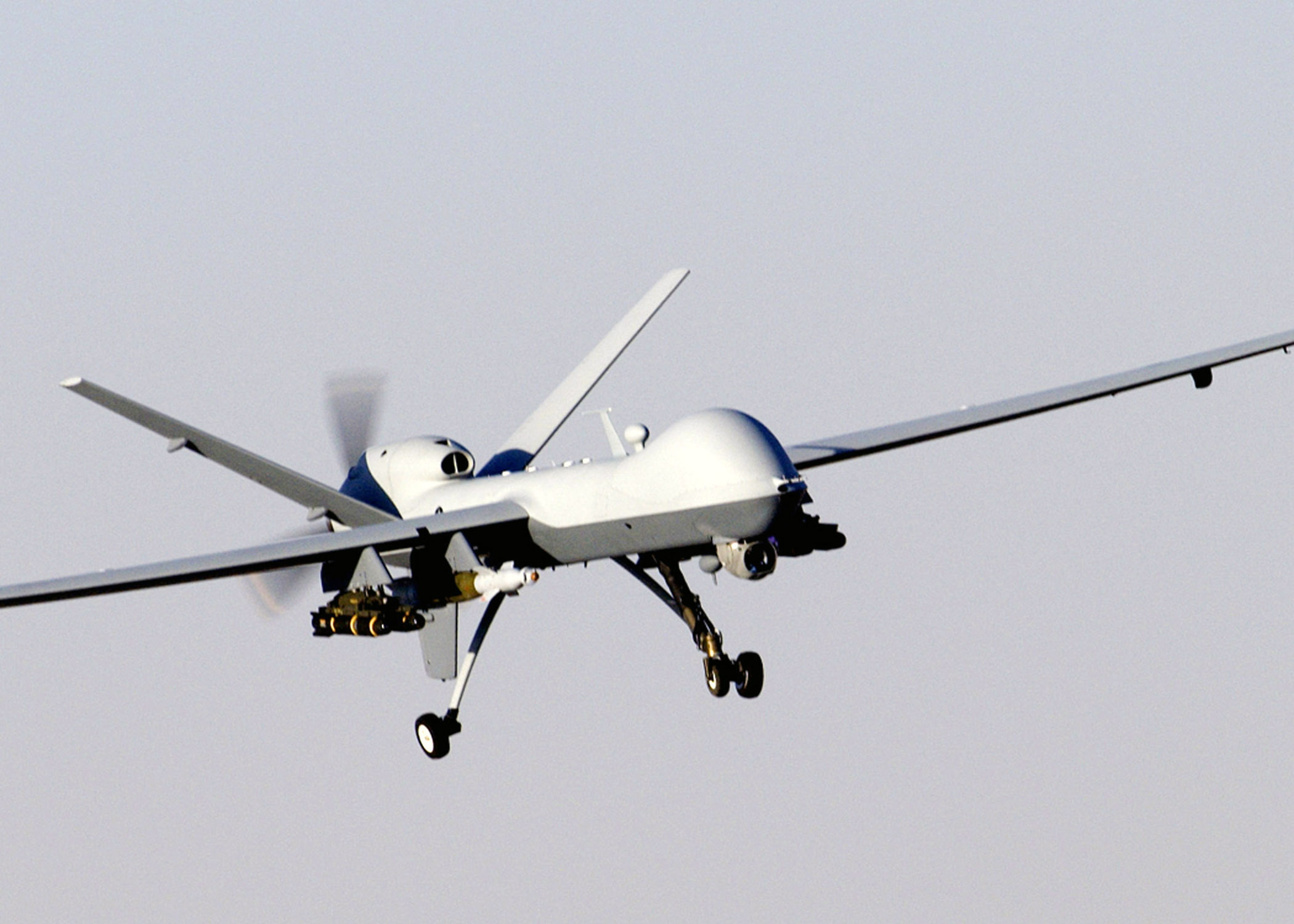
Drones became standard military tools. Drones are now widely used for surveillance, targeting, and airstrikes. Back to Afghanistan, which seems to have been some sort of catalyst for the entire subject, the US used the General Atomics "MQ-1 Predator" and "MQ-9 Reaper" for a wide variety of uses, including aid in withdrawal. Almost in a blink of an eye, on February 24, 2022, the world superpower Russia invaded NATO-supported Ukraine. Although Ukraine got immense support, it was fighting against one of the world's strongest militaries and would need to find a way to use its resources as efficiently as possible. Drones proved a helping hand when all others failed. Drones have become central to modern combat because of their wide variety of uses and how cheaply you can build them. Ukraine has been able to combat superior Russian technology with a simple quadcopter with a grenade taped to it. Talk about creativity. Eventually, Russia picked up on the hints and is also using low-cost drones with ever-advancing technology to attack anything from infrastructure to naval systems to land transportation. Really, around the start of 2025, we began to see a large movement toward autonomy, mass production, and even anti-drone technology. We have seen drones specialized for all types of warfare, from the oceans to mountains. If drones can fly there, they can be used for destructive purposes. We have seen stealth drones, drones that use fiber optics to avoid jamming, drones that are nearly invisible to the human eye, and drones the size of helicopters.

The Future

Someone out there knows what the future of drones holds. Maybe one person will start a movement; maybe many. Drones may assist AI in taking over the world. Although the future is unknown, it begins tomorrow, which begs the question: how will drones continue to evolve and adapt as time passes? The only thing I know about the future is that it will be fought with drones, lots and lots of drones.


Credit for photos found on github repository.